
 Sina Weibo•新浪微博
Weibo Platform Overview
China’s public conversation layer for real-time trends, breaking news, entertainment, fandoms, events, and mass-market brand visibility.
Key Platform Data
Latest official user disclosure, June 2026
Monthly active users
561M
June 2026
Average daily users
254M
June 2026
Content ecosystem
39 fields
2024 ESG disclosure
Core identity
Public + real-time
Open conversation
About Weibo
Weibo is a leading public social-media platform in China. It combines real-time self-expression with social interaction, content aggregation, search, and distribution.
Unlike a private social graph, Weibo relationships are asymmetric: anyone can follow public figures, media, institutions, brands, or creators. A post can become a live public conversation through hashtags, comments, reposts, media coverage, and Hot Search visibility.
That makes Weibo especially useful when timing and public relevance matter—breaking news, entertainment releases, sports events, celebrity moments, product launches, cultural debates, and crisis communication.
Platform History
Launch
2009
Sina Weibo launched as a public microblogging service.
NASDAQ IPO
2014
Weibo listed on NASDAQ under ticker WB.
Hong Kong listing
2021
Weibo completed its secondary listing on HKEX under 9898.
Public conversation
Today
The platform connects real-time trends with 39 vertical content fields.
Audience Demographics
A broad public audience organized around events, people, and interest communities

Core audience
- ✓Gen Z and Millennials are central to culture and fandom
- ✓Broad reach across public, media, and professional audiences
- ✓Users follow people, institutions, events, and interest communities
Audience behavior
- ✓Checks real-time topics and breaking developments
- ✓Comments and reposts to join public conversation
- ✓Moves between Hot Search, feeds, search, and Super Topics
High-value moments
- ✓Entertainment and product launches
- ✓Sports, esports, and live events
- ✓News cycles, public affairs, and reputation moments
Core Platform Features
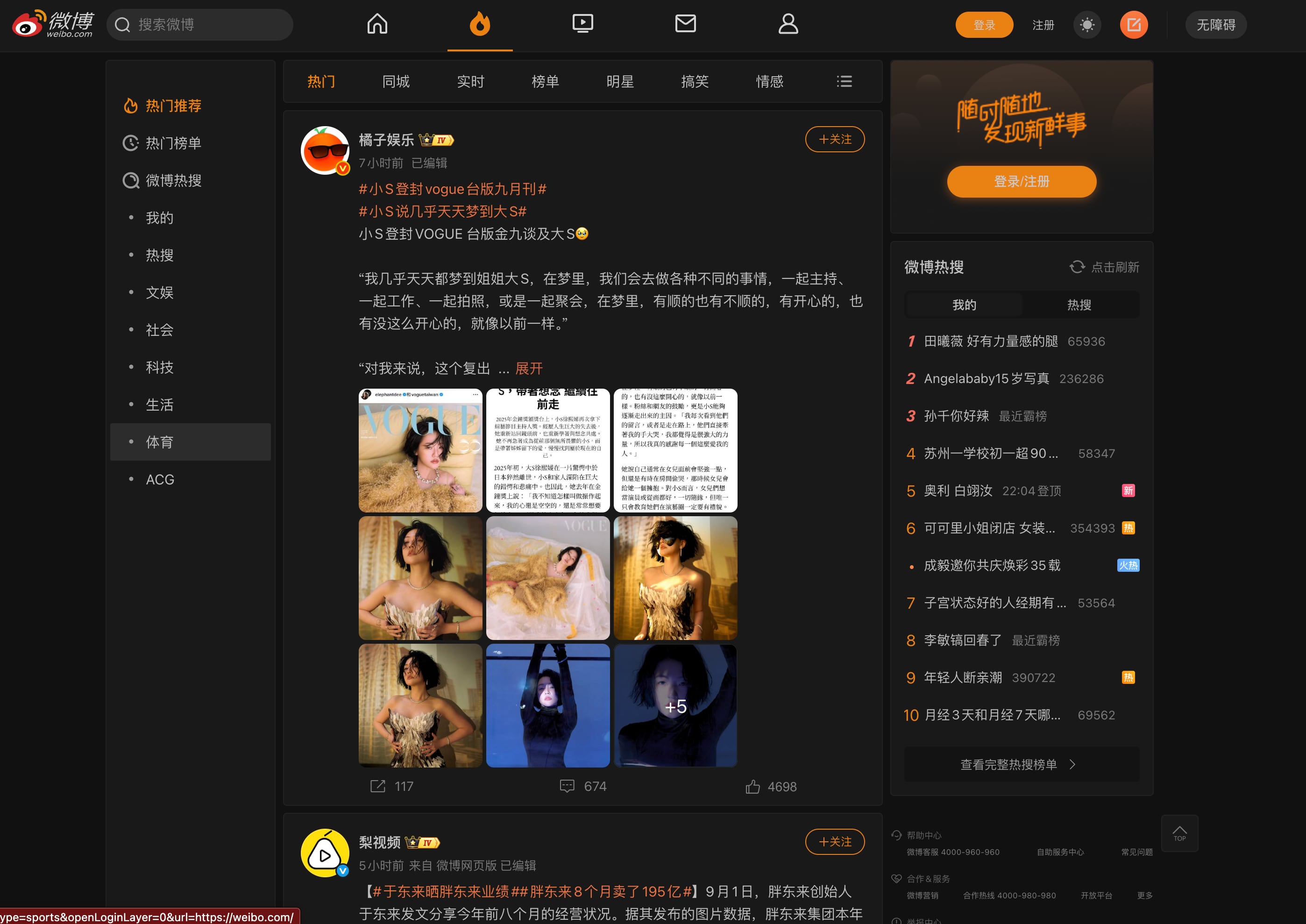
Hot Search (热搜)
A real-time ranking of public attention. It is the platform’s most recognizable discovery surface for news, entertainment, sport, product launches, and cultural moments.
Public social graph
Asymmetric following lets users, media, brands, celebrities, institutions, and creators participate in the same open conversation and redistribute posts through comments and reposts.
Super Topics (超话)
Persistent interest communities organize fans around celebrities, shows, games, sports teams, hobbies, and other shared identities beyond a single trending event.
Multimedia feed
Short posts can combine images, video, long-form articles, livestreams, polls, hashtags, and external context, making Weibo useful across fast updates and deeper explanation.
Popular Content Categories
Weibo reported 39 vertical content fields in its 2024 ESG disclosure
Creator Monetization
Eligibility, products, and commercial rules vary by account and campaign
MODEL 01
Brand sponsorships
Creator-led original posts, repost amplification, event coverage, product launches, and longer ambassador relationships.
MODEL 02
Weirenwu (微任务)
Weibo’s commercial-content marketplace connects advertisers with creators and institutions, with task review, creator selection, pricing, and execution workflows.
MODEL 03
Advertising revenue share
Eligible creators can supplement income through ads shown around posts, profile pages, articles, and video playback surfaces.
MODEL 04
Livestreams, membership & paid content
Depending on eligibility and current product access, creators can monetize through live interaction, memberships, subscriptions, and other value-added services.
Why Weibo matters
Weibo is where creators become part of the public conversation.
Use it when your strategy depends on timely relevance, recognizable public identity, media amplification, fandom, event participation, or building searchable authority around a topic.